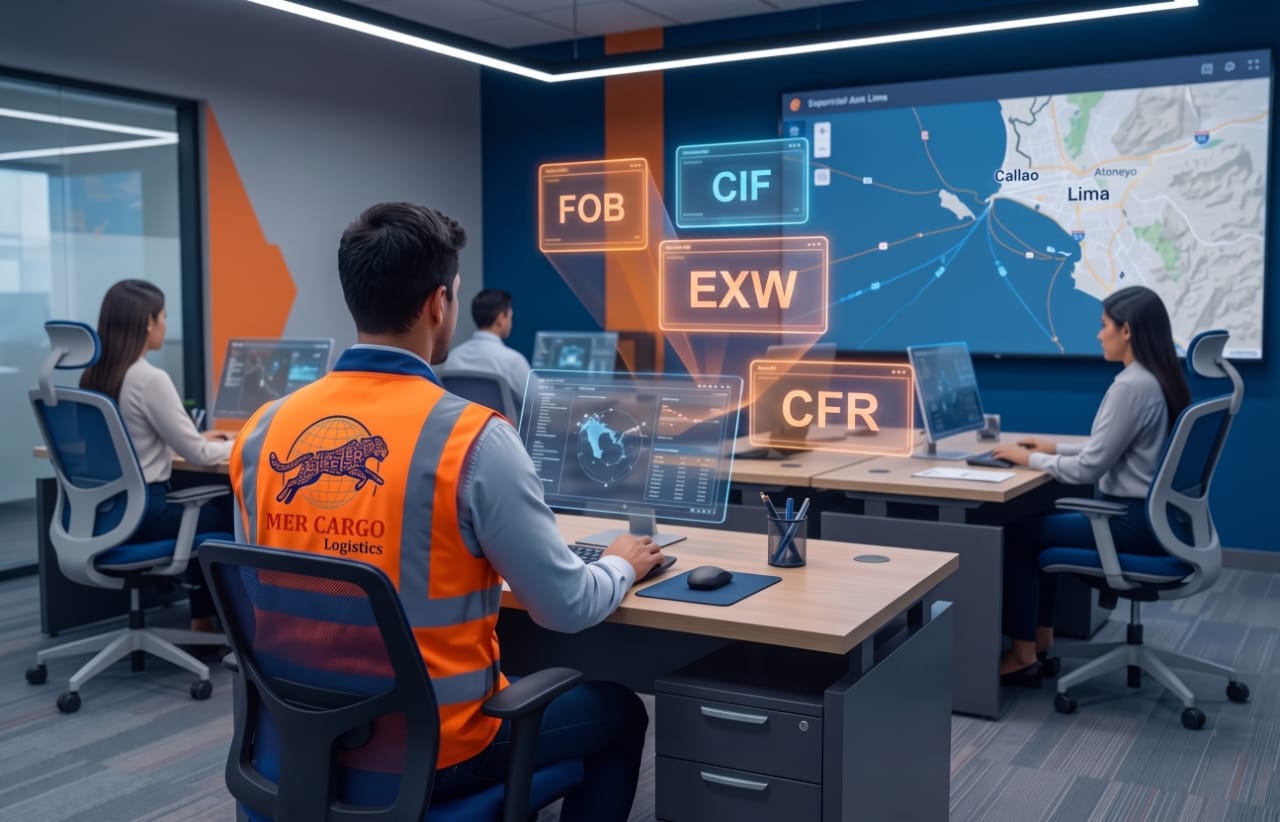
Los 11 Incoterms vigentes a 2026, explicados sin tecnicismos: hasta dónde llega tu responsabilidad, quién paga cada tramo y en qué momento exacto la carga deja de ser tu problema.
All 11 Incoterms in force as of 2026, explained in plain language: how far your responsibility goes, who pays for each leg, and the exact moment the cargo stops being your problem.
Un Incoterm no es un trámite: es la línea que separa "esto lo pago y lo arriesgo yo" de "esto lo paga y lo arriesga el comprador". La barra de cada tarjeta muestra el punto exacto donde tu responsabilidad termina y empieza la del comprador.
An Incoterm isn't paperwork: it's the line between "I pay and risk this" and "the buyer pays and risks this." Each card's bar shows the exact point where your responsibility ends and the buyer's begins.
Tu única obligación es dejar la mercancía lista en tu almacén o planta. Desde ahí, el comprador se encarga de todo: recojo, transporte interno, aduana de salida, flete internacional y seguro. Es el Incoterm de menor responsabilidad para ti, pero también el que menos control te da sobre la carga una vez que sale de tu puerta.
Your only obligation is to have the goods ready at your warehouse or plant. From there, the buyer handles everything: pickup, inland transport, export customs, international freight and insurance. It's the Incoterm with the least responsibility for you — but also the least control once it leaves your door.
Mínima responsabilidad, mínimo control Minimum responsibility, minimum controlTú entregas la carga ya despachada de exportación al transportista que el comprador contrató (puede ser en tu almacén, en un aeropuerto o en un terminal). Desde que el transportista la recibe, el riesgo pasa al comprador. Es el Incoterm más recomendado para carga aérea y contenedores cuando no quieres asumir el flete internacional.
You deliver the export-cleared cargo to the carrier the buyer hired (at your warehouse, an airport, or a terminal). Once the carrier receives it, risk passes to the buyer. This is the most recommended Incoterm for air cargo and containers when you don't want to take on international freight.
El más usado en carga aérea Most used for air cargoIgual que FCA en cuanto a riesgo (pasa al comprador cuando entregas al primer transportista), pero además tú pagas el flete hasta el punto de destino acordado. Ojo: pagar el flete no significa asumir el riesgo del viaje — si algo pasa en tránsito, el costo de reponer la carga ya es del comprador.
Risk transfers the same way as FCA (once you hand over to the first carrier), but you also pay freight to the agreed destination point. Note: paying the freight does not mean taking on the risk of the journey — if something happens in transit, replacing the cargo is already the buyer's cost.
Tú pagas el flete, el riesgo ya no es tuyo You pay freight, risk is already the buyer'sEs CPT pero con un seguro de cobertura amplia obligatorio (cláusula A, la más completa) que tú contratas a nombre del comprador. Desde 2020 este seguro subió de nivel frente a la versión anterior, así que tu cotización debe incluir ese costo adicional. Se usa mucho en exportación de textiles y productos de mayor valor por vía aérea.
It's CPT but with a mandatory broad-coverage insurance policy (Clause A, the most complete) that you arrange on the buyer's behalf. Since 2020 this insurance level increased compared to the previous version, so your quote must include that extra cost. Widely used for textile exports and higher-value goods shipped by air.
Incluye seguro de cobertura amplia Includes broad-coverage insuranceAsumes el transporte, el riesgo y los costos hasta que la carga llega al lugar acordado en el país destino, lista para descargar pero todavía en el camión o contenedor. La descarga y los trámites de importación (aranceles, impuestos) corren por cuenta del comprador. Requiere que conozcas bien los costos logísticos en el destino.
You take on transport, risk and costs until the cargo reaches the agreed place in the destination country, ready to unload but still on the truck or in the container. Unloading and import formalities (duties, taxes) are the buyer's responsibility. Requires you to know destination logistics costs well.
Llega al destino, aún sin descargar Arrives at destination, not yet unloadedEs igual que DAP, pero tu responsabilidad no termina hasta que la carga está descargada en el lugar de destino. Es el único Incoterm que te obliga a asumir la descarga en destino, así que solo conviene usarlo si tienes un agente de confianza allá que pueda manejar ese proceso. Los trámites de importación siguen siendo del comprador.
Same as DAP, but your responsibility doesn't end until the cargo is unloaded at the destination place. It's the only Incoterm that requires you to handle unloading at destination, so it's only worth using if you have a trusted agent there to manage that step. Import formalities remain the buyer's.
Único que exige descargar en destino Only one requiring unloading at destinationEs la máxima responsabilidad para ti como exportador: asumes transporte, seguro, y también los aranceles e impuestos de importación en el país del comprador, hasta dejar la carga en su puerta lista para usar. Solo recomendable si conoces bien la normativa aduanera del país destino o trabajas con un agente local ahí, porque un error en esos trámites es tu costo, no el del comprador.
This is maximum responsibility for you as exporter: you cover transport, insurance, and also the import duties and taxes in the buyer's country, delivering the cargo to their door ready to use. Only advisable if you know the destination country's customs rules well or work with a local agent there, since any error in that process is your cost, not the buyer's.
Máxima responsabilidad para el exportador Maximum responsibility for the exporter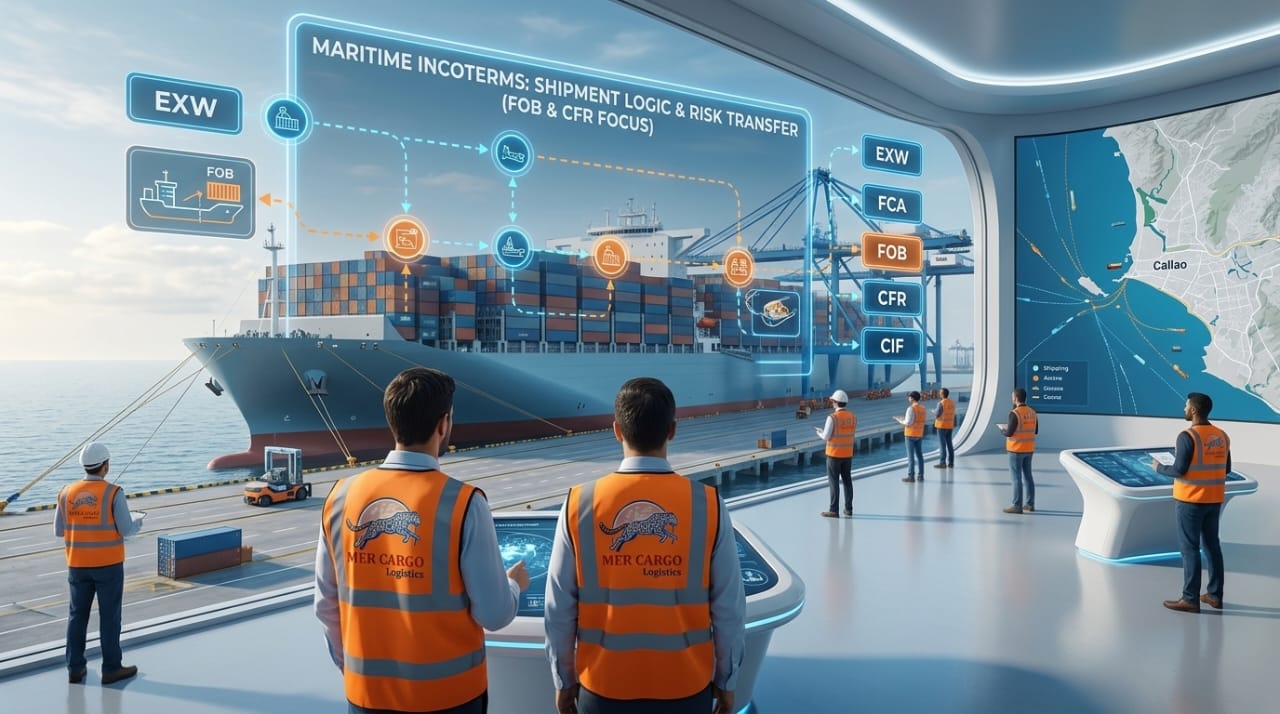
Tu responsabilidad termina cuando dejas la carga junto al buque en el puerto de embarque (en el muelle o en una barcaza), antes de que suba a bordo. El comprador asume desde ahí la subida al barco, el flete y el seguro. Se usa poco frente a FOB, principalmente para carga a granel o de gran tamaño que no se sube en contenedor.
Your responsibility ends when you place the cargo alongside the vessel at the port of loading (on the quay or a barge), before it's loaded on board. The buyer takes over from there: loading, freight and insurance. Used less than FOB, mainly for bulk or oversized cargo not shipped in containers.
Para carga a granel o no contenerizada For bulk or non-containerized cargoTu responsabilidad termina en el momento exacto en que la carga sube a bordo del buque en el puerto de embarque (Callao, por ejemplo). Desde ese punto, el comprador asume el flete internacional, el seguro y cualquier riesgo del viaje. Es el Incoterm más usado por exportadores peruanos que recién empiezan, porque limita tu responsabilidad a lo que pasa dentro del Perú.
Your responsibility ends the exact moment the cargo is loaded on board the vessel at the port of shipment (Callao, for example). From that point, the buyer takes on international freight, insurance and any risk of the voyage. It's the most used Incoterm among Peruvian exporters just starting out, because it limits your responsibility to what happens inside Peru.
Ideal para exportadores nuevos Ideal for new exportersEl riesgo de la carga pasa al comprador en el mismo momento que en FOB (cuando sube al buque), pero tú además contratas y pagas el flete marítimo hasta el puerto de destino. Es decir: pagas el viaje, pero si el barco tiene un problema en altamar, esa pérdida ya es del comprador, no tuya. Te da más control sobre qué naviera y qué ruta se usa.
Cargo risk passes to the buyer at the same moment as in FOB (when loaded on the vessel), but you also arrange and pay for ocean freight to the destination port. In other words: you pay for the voyage, but if something happens to the vessel at sea, that loss is already the buyer's, not yours. Gives you more control over which carrier and route is used.
Más control sobre la naviera y la ruta More control over carrier and routeEs CFR más un seguro obligatorio (cobertura mínima, cláusula C) que contratas a nombre del comprador para cubrir el trayecto marítimo. El riesgo sigue pasando cuando la carga sube al buque, igual que en FOB y CFR — el seguro es una protección adicional para el comprador, no una extensión de tu responsabilidad. Genera confianza en compradores que recién trabajan contigo.
It's CFR plus mandatory insurance (minimum coverage, Clause C) that you arrange on the buyer's behalf to cover the sea voyage. Risk still passes when the cargo is loaded on the vessel, same as FOB and CFR — the insurance is extra protection for the buyer, not an extension of your responsibility. Builds trust with buyers who are new to working with you.
Genera más confianza al comprador Builds more buyer confidenceNota: esta guía refleja las reglas Incoterms® 2020 de la Cámara de Comercio Internacional (ICC), vigentes a agosto de 2026. La ICC actualiza estas reglas cada 10 años aproximadamente; la próxima revisión se espera para 2030. Antes de cerrar un contrato, confirma siempre el Incoterm por escrito con el año de la versión (ej. "FOB Callao, Incoterms® 2020").
Note: this guide reflects the Incoterms® 2020 rules from the International Chamber of Commerce (ICC), in force as of August 2026. The ICC updates these rules roughly every 10 years; the next revision is expected in 2030. Always confirm the Incoterm in writing along with its version year (e.g. "FOB Callao, Incoterms® 2020") before closing a contract.